4. BOOMARANG
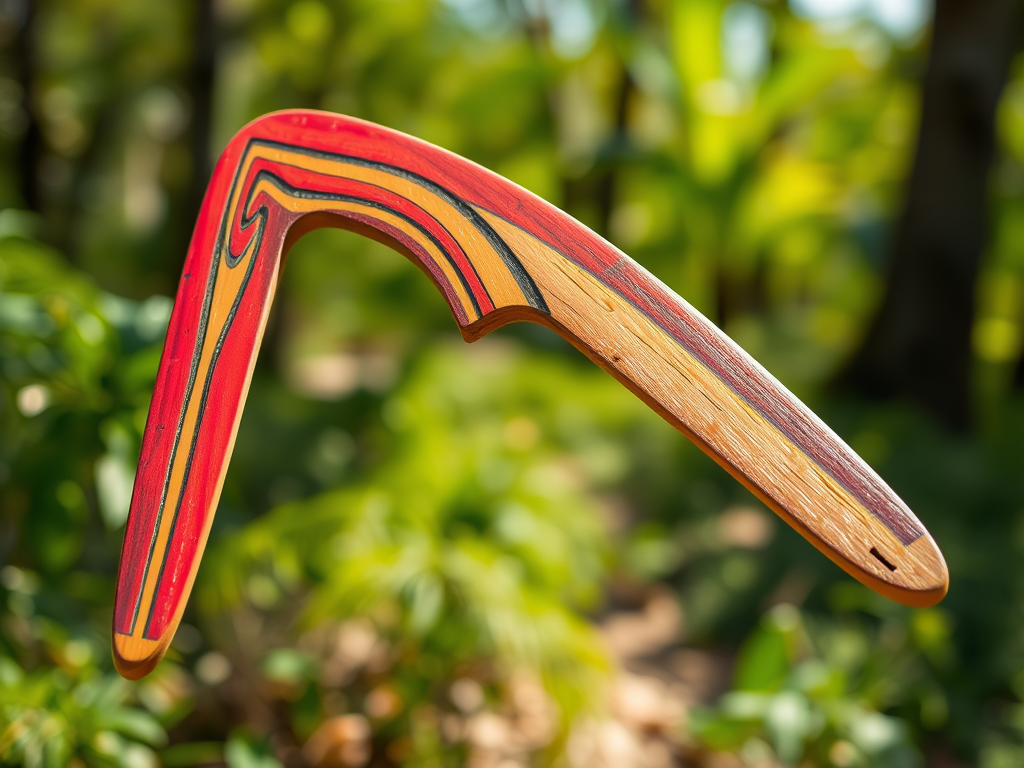
The boomerang shape is uniquely designed, typically characterized by two curved arms that extend from a central hub. Its form resembles a characteristic “L” or “V” shape, often flattened and symmetrical, which plays a crucial role in its aerodynamic properties.
How It Returns to the Thrower
- Aerodynamics: When a boomerang is thrown with a spinning motion, it creates lift due to the differences in air pressure on either side of its arms. The curved surface causes air to move faster over one side, resulting in lower pressure, while the opposite side experiences higher pressure. This pressure differential generates lift.
- Gyroscopic Stability: The spin of the boomerang acts like a gyroscope, providing stability during its flight. This stability helps maintain its trajectory, allowing it to follow a curved path rather than falling straight to the ground.
- Angle of Release: The angle at which the boomerang is thrown significantly influences its flight path. An appropriate release angle helps ensure that the boomerang travels in a circular pattern, eventually returning to the thrower.
- Rotation and Drift: As it travels, the boomerang continues to spin, which helps it stay aloft. The interaction between the lift generated and the drag creates a forward movement, and the shape allows the boomerang to gradually drift toward the original position of the thrower.
By combining these principles, a well-thrown boomerang elegantly arcs back towards the thrower, demonstrating a fascinating device.
 SCIENCE LABS