16. SPHERE
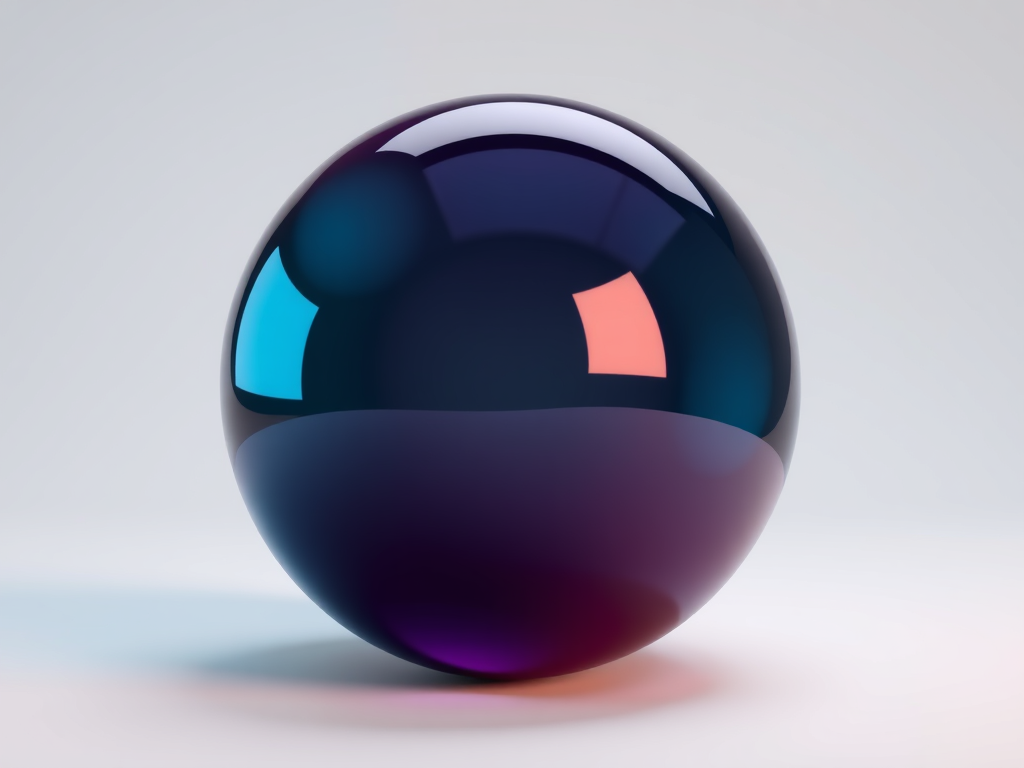
Properties of a Sphere
- Symmetry: A sphere is perfectly symmetrical around its center, making it the most uniform shape in three-dimensional space.
- Equal Distance: Every point on the surface of the sphere is equidistant from its center.
- No Edges or Vertices: Unlike other three-dimensional shapes, spheres have no edges or vertices, which contributes to their smoothness.
Uses of Spheres
- In Nature: Spheres can be found in the form of celestial bodies like planets, stars, and moons, as well as in smaller objects like bubbles and fruits.
- Sports: Many sports utilize spherical objects, such as balls in basketball, soccer, and tennis, taking advantage of their uniform shape for consistent movement and bounce.
- Engineering and Design: Spheres are often used in engineering applications due to their structural integrity when subjected to uniform pressure.
- Functional Objects: Spherical designs are used in a variety of everyday objects, from doorknobs to decorative items, emphasizing aesthetics and ergonomics.
- Physics and Space: In physics, the sphere is a common shape for models of atomic structures and is crucial in fields like astrophysics for modeling celestial phenomena.
Why Spheres are Found Everywhere
- Natural Formation: The sphere is a natural shape that results from processes such as gravity pulling material into a rounded form, resulting in celestial bodies and drops of water.
- Efficiency: The spherical shape is the most efficient in terms of volume-to-surface area ratio, making it ideal for containing liquids and gases.
- Aerodynamics: In engineering, spherical shapes can reduce drag and resistance, making them preferable in many applications, including vehicles and aircraft design.
- Mathematical and Physical Principles: Concepts like isotropy (uniformity in all directions) and equilibrium often correlate with spherical shapes due to their mathematical properties.
In summary, the sphere is a fundamental shape found throughout nature and human innovation, appealing for both its properties and its functionality in various contexts.
 SCIENCE LABS