13. SPINNING TOP
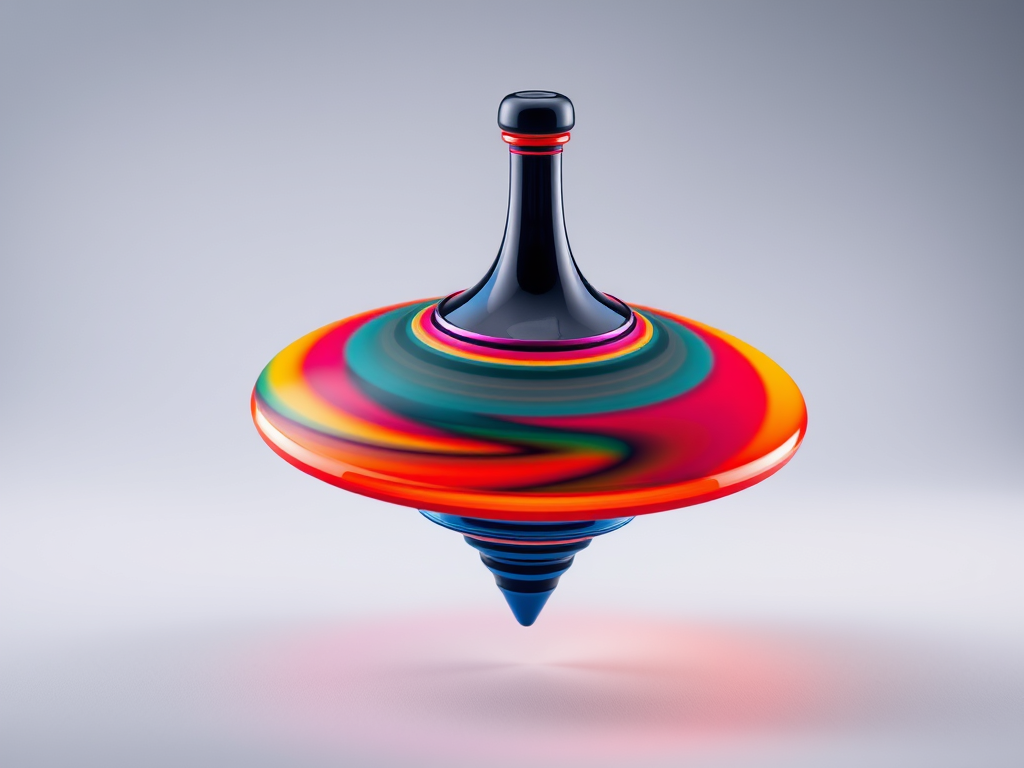
The principle of a spinning top is based on angular momentum and gyroscopic stability. When a top is spun, it rotates around its axis, creating angular momentum that keeps it stable. The following are key concepts related to the functioning of a spinning top:
- Angular Momentum: This is the quantity of rotation of a body and is dependent on its mass, shape, and speed of rotation. A spinning top maintains its angular momentum, which helps resist changes to its orientation.
- Gyroscopic Stability: As the top spins, it experiences gyroscopic effects that help it maintain its upright position. This is due to the conservation of angular momentum, which causes the top to resist tilting or falling over.
- Friction and Torque: Friction between the top and the surface can exert a torque, affecting its spin. If the friction is sufficient, the top will eventually lose its angular momentum and fall.
- Precession: If a force is applied to a spinning top (for example, if it starts to tip over), it responds by moving in a direction perpendicular to the applied force rather than tipping directly over. This phenomenon is known as precession.
In summary, the stability of a spinning top is a fascinating demonstration of the principles of physics, particularly the laws governing angular momentum and the forces acting on rotating objects.
The role of shape in a spinning top is crucial for its performance and stability during rotation. Here are some key points regarding how shape influences a spinning top:
- Center of Mass: The shape of the top can affect its center of mass, which is the point where its mass is evenly distributed. An optimal shape will allow the center of mass to be low and centralized, which enhances stability and prolongs the spinning duration.
- Inertia Distribution: Different shapes distribute mass differently, impacting the moment of inertia, a measure of how difficult it is to change the rotational motion. A well-designed top will have a shape that maximizes its moment of inertia, helping it maintain spin longer and resist wobbling.
- Aerodynamics: Although spinning tops are not primarily affected by aerodynamics, their shape can influence air resistance. A streamlined shape will experience less drag, allowing for a smoother spin.
- Friction with the Surface: The shape can also determine the points of contact with the spinning surface. A narrow or pointed base minimizes contact area, reducing friction and allowing for a longer spin.
- Gyroscopic Effects: Certain shapes enhance gyroscopic stability. For example, a symmetric shape allows for balanced rotation and helps the top maintain its upright position while spinning.
In summary, the shape of a spinning top plays a significant role in determining its stability, spin duration, and overall performance, making it a critical factor in designing effective spinning tops.
 SCIENCE LABS